Community
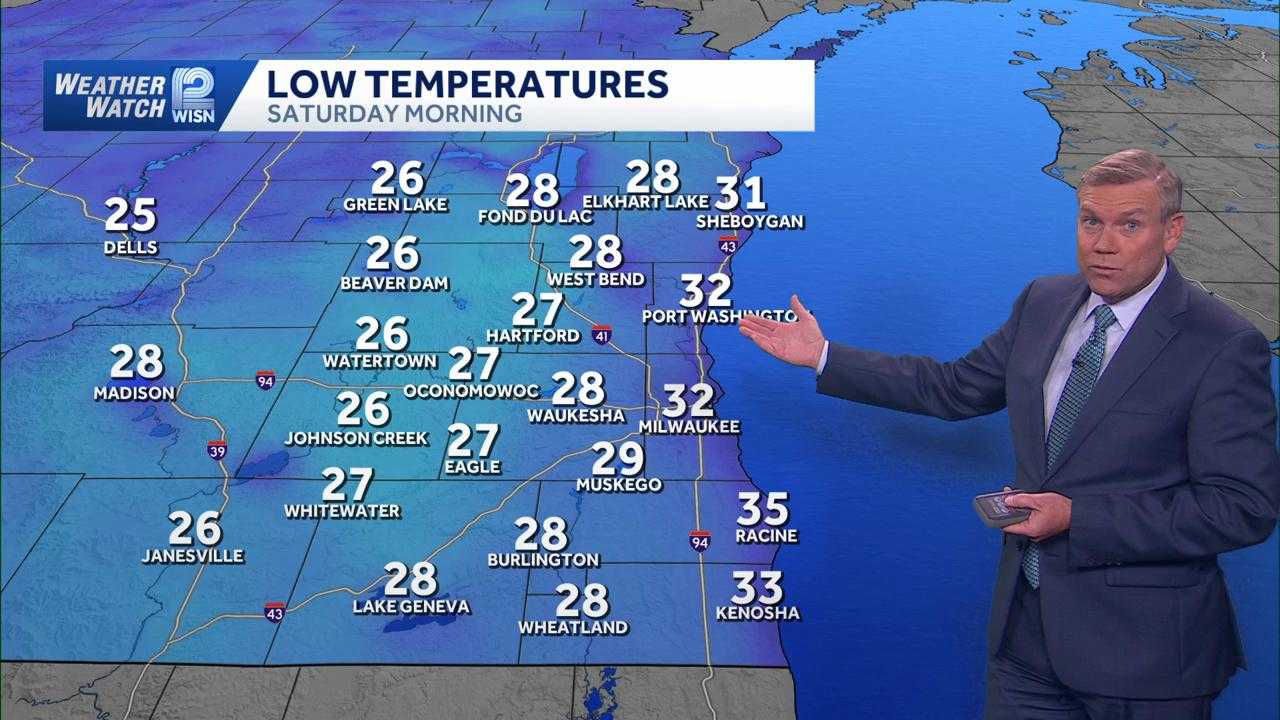
Colder air moving in right now in SE Wisconsin
By Marcus Chen
Advertisement · Why this ad?
Katherine oversees editorial operations across all six brands. Before joining The Meridan Group, she spent 14 years at the Minneapolis Star Tribune, where she led the metro desk through its digital transformation. She holds a Master's in Journalism from Northwestern's Medill School.
More from Katherine →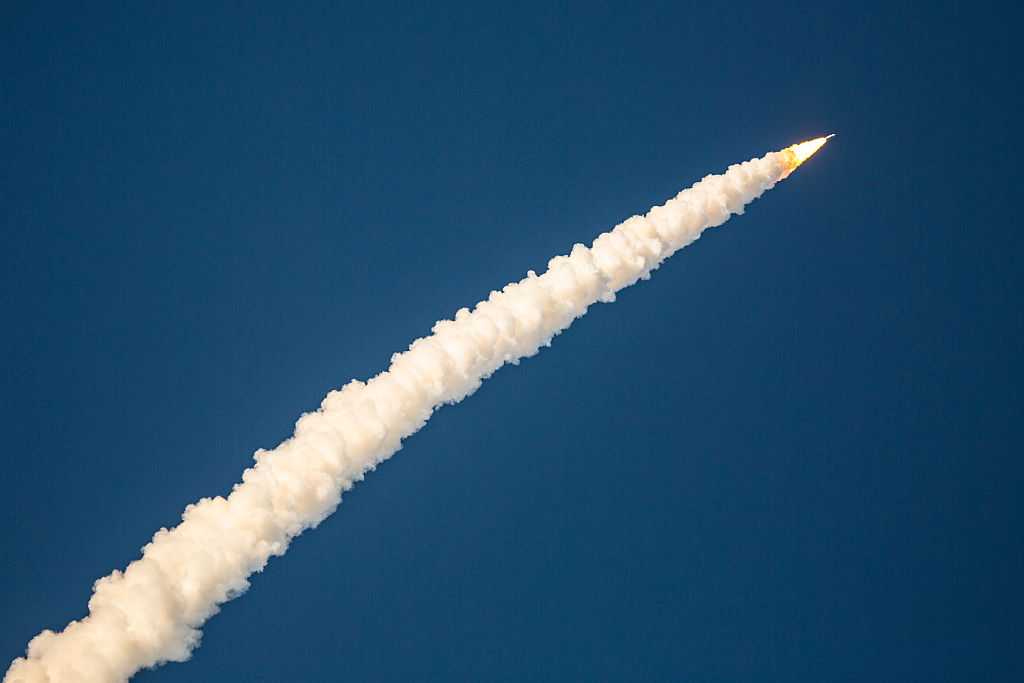
On a quiet November morning in Brookfield, residents might have noticed a subtle shift in their GPS signals or a faint flicker in their navigation apps—an unexpected ripple from a distant event. While the world watched NASA’s Artemis II mission with awe, behind the scenes, scientists have uncovered a surprising consequence: the rocket’s rapid ascent punched holes in the Earth's upper atmosphere, specifically in the ionosphere, disrupting GPS systems used daily by thousands of local residents and businesses. This revelation underscores how even our most advanced space endeavors can have tangible effects on our community’s infrastructure and daily lives.
The recent research from the Department of Earth Sciences at Taiwan’s National Cheng Kung University indicates that Artemis II’s launch produced three distinct disturbances in the ionosphere—the layer of charged particles that plays a crucial role in radio wave propagation and satellite communication. The study, still pending peer review, points out that the rocket and Orion capsule’s maneuvers created these disruptions, marking a first in spaceflight history where a single mission caused multiple ionospheric disturbances over the same region.
According to the researchers, the disturbances affected the Global Navigation Satellite System (GNSS) and GPS signals, which are vital for everything from personal navigation to critical infrastructure. The ionosphere’s integrity is essential for the accuracy of these systems, and disturbances can lead to degraded performance or even temporary outages. While similar effects have been observed during rocket launches since the 1970s, this is the first time a mission of Artemis II’s scope has been linked to such significant interference.
Notably, the study emphasizes that Artemis II’s launch was particularly energetic, with the rocket reaching speeds and altitudes that surpassed many previous missions, intensifying its impact on the ionosphere. The researchers meticulously analyzed data from multiple satellites and ground-based sensors, noting that the disturbances persisted for several minutes and covered a broad geographic area, including parts of the Midwest. This pattern suggests that future launches, especially those involving heavy payloads or rapid ascent profiles, could pose similar risks if not carefully managed.
For residents of Brookfield and surrounding communities, the potential impact is more than just technical jargon. Many local businesses rely on GPS for logistics, delivery, and even farming operations. Emergency services depend on precise navigation signals to respond swiftly to incidents, and even recreational activities like hiking or boating can be affected if GPS accuracy diminishes.
Farmers in nearby areas, who use GPS-guided equipment to plant and harvest crops efficiently, reported minor glitches during the days following Artemis II’s launch. Delivery companies experienced slight delays as their GPS systems recalibrated. In hospitals and emergency response centers, dispatchers noted occasional signal inconsistencies, prompting a review of backup navigation methods. These real-world effects highlight how deeply intertwined our daily routines are with satellite technology.
Furthermore, this incident raises questions about the long-term effects of human activity on our atmosphere. As space exploration pushes further into the cosmos, understanding how these missions influence Earth's environment becomes increasingly important. The study’s findings serve as a reminder that our technological advancements are interconnected with natural systems, and careful monitoring is essential to safeguard our community’s safety and prosperity.
While Brookfield’s residents may not have directly felt the disturbance, local officials and community leaders are paying close attention. Mayor Jane Smith expressed a cautious optimism, emphasizing the importance of space exploration while acknowledging the need for responsible oversight. “Our community benefits from technological progress, but we must also ensure that these advancements do not inadvertently compromise our safety or daily routines,” she said during a recent town hall.
Local tech and transportation sectors are increasingly aware of the importance of resilient infrastructure. The Brookfield Chamber of Commerce is collaborating with regional agencies to promote awareness about how space weather can influence local systems. This includes workshops with engineers, meteorologists, and satellite operators to prepare for future disturbances. Community groups have also started discussions about investing in more robust GPS backup systems and educating residents on how to respond if navigation tools are temporarily unreliable.
Particularly in a community like Brookfield, where many families commute daily and local businesses depend on precise logistics, understanding the potential vulnerabilities is critical. Schools are incorporating basic space weather education into their science curriculums, fostering a generation that is more aware of the interconnectedness of space and Earth. The shared goal is to build resilience, ensuring that even as we reach for the stars, we do not lose sight of the safety and stability of our everyday lives.
Scientists and policymakers agree that further research is vital. The Artemis II findings highlight the need for enhanced monitoring of space weather and its terrestrial effects. NASA and other agencies are now considering ways to mitigate such disruptions, including improved satellite shielding and real-time atmospheric monitoring—efforts that could benefit Brookfield in the long run.
As the nation prepares for future lunar missions and the possibility of establishing a moon base, understanding and managing space weather impacts become even more critical. For our community, this means staying engaged with scientific developments and advocating for policies that protect our infrastructure. The lessons from Artemis II remind us that even the most ambitious human endeavors must be balanced with a commitment to responsible stewardship of our planet and its atmosphere.
Local universities, including the University of Wisconsin-Milwaukee and Marquette University, are expanding research initiatives to better understand space weather phenomena. These collaborations aim to develop predictive models that can alert communities like Brookfield of upcoming disturbances, allowing for preemptive measures. Such advances could safeguard not only GPS systems but also power grids, communication networks, and other vital infrastructure.
Community leaders are urging residents to stay informed through official channels and to support policies that fund scientific research into space weather. As families and community organizations gather for upcoming events, discussions about space exploration’s benefits and risks are becoming more common. This collective awareness fosters a resilient community that values progress while remaining vigilant about potential challenges.
Finally, as families and communities built on faith and perseverance, we find reassurance in the ongoing pursuit of knowledge—knowing that each challenge offers an opportunity to grow stronger and more united in our shared journey toward the stars.By Marcus Chen
By Marcus Chen

By Katherine Langford

By Marcus Chen